
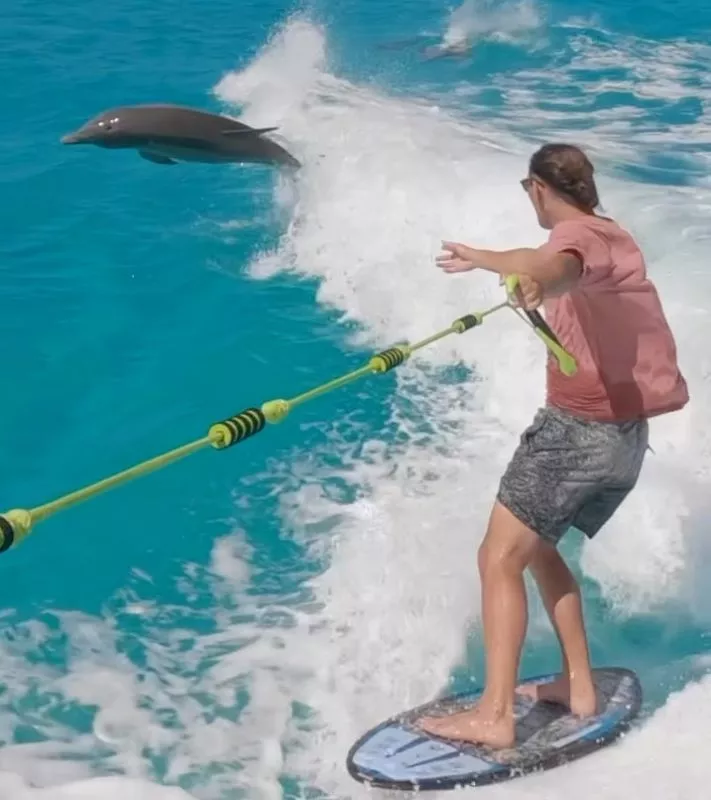
Why Dropping the Rope Matters
One of the biggest milestones in wakesurfing is dropping the rope for the first time. If you are still working on the start, go back to how to get up wakesurfing first. This guide assumes you can already ride with the handle.
The good news is that dropping the rope is usually much easier than people think. The bad news is that many riders make it harder than it needs to be.
The biggest mistake I see is riders trying to let go of the rope before they're actually in the right position on the wave. If you're not in the pocket, the wave can't do its job.
Here's exactly how I teach riders to drop the rope.
How I Teach Riders to Drop the Rope
Follow these eight steps once you can ride comfortably with the handle.
Step 1: Get Into the Pocket
Before you think about letting go, you need to make sure you're in the right spot on the wave. Once you're up and riding comfortably, focus on getting tight to the wave.
You don't want to be too high on the face of the wave, and you don't want to be way out in the flats. All of the push and momentum come from the wave itself, and the sweet spot is right in the pocket.
The pocket is where the wave has the most energy. If you're too far forward, you will struggle to stay balanced. If you're too far back, you will constantly be fighting to stay in the wave.
Before dropping the rope, make sure you're sitting in the pocket where the wave feels strongest.
Step 2: Let the Wave Start Doing the Work
One of the biggest misconceptions in wakesurfing is that the rope is what keeps you moving. It's not. The wave is what keeps you moving. The rope is simply helping you get into position.
Once you're in the pocket, start applying a little bit of pressure to your front foot. As you do this, you should notice the rope starting to develop slack.
That slack is exactly what you want. It tells you that you're no longer relying on the rope for speed, and that the wave is starting to push you.
Whenever I coach riders, I tell them to look for slack in the rope. It's one of the easiest ways to know you're ready to let go.
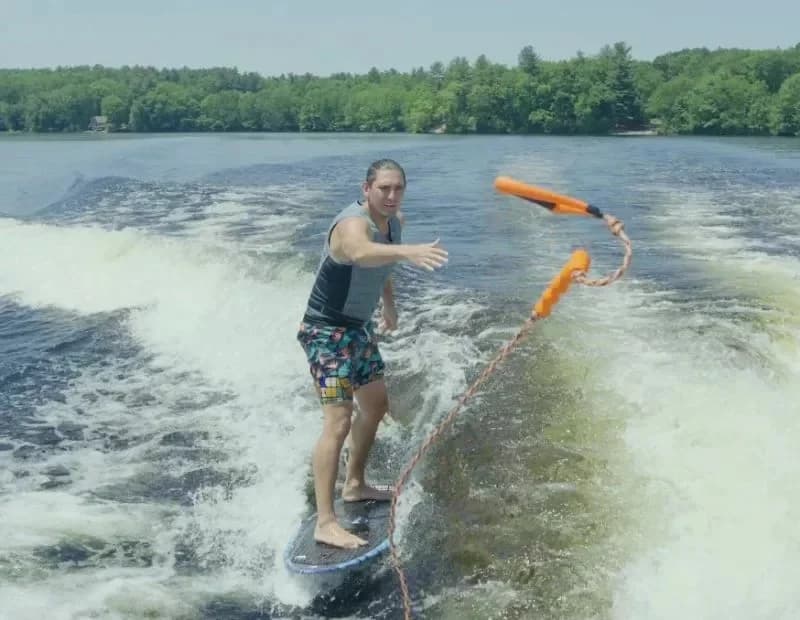
Step 3: Stay Tight to the Wave
As you're preparing to drop the rope, stay connected to the wave. Many riders drift too far into the flats, and as soon as they do, they lose the push.
One of the easiest ways to stay connected is by applying pressure through your toes. That toe-side pressure helps keep you snug to the wave.
The closer you stay to the pocket, the easier the ride becomes. The wave is where the energy is, and the farther you move away from it, the less help you will get.
Step 4: Reach for the Boat
One of my favorite coaching tricks is incredibly simple: reach toward the boat.
When you reach toward the boat, a few things happen naturally. Your body shifts forward, you apply a little more pressure through your front foot, and you become more connected to the wave.
Most riders immediately feel more push when they do this. It's a small adjustment, but it can make a huge difference.
Step 5: Understand Your Front Foot
One thing I constantly teach is that your front foot is your gas pedal. Your front foot controls acceleration.
When you apply pressure to your front foot, the board speeds up and moves closer to the boat. This helps you stay in the pocket.
There's such a thing as too much front-foot pressure, though. If you put too much weight on the front foot, the nose of the board can start to dig into the water. You will feel drag, and the board will stop feeling efficient.
The goal is a small amount of pressure. Just enough to generate speed and stay connected to the wave.
Step 6: Understand Your Back Foot
If your front foot is the gas pedal, your back foot is the brake.
Whenever you're moving too fast, you can apply a little more pressure to your back foot. This naturally slows the board down and allows you to move farther back in the wave.
The better wakesurfers are constantly balancing these two concepts. Front foot for speed. Back foot for control. Once that clicks, how to pump in the wave is the next skill that unlocks even more control.
Step 7: Relax
This is probably the most overlooked part of dropping the rope. Most riders get nervous. They crouch down, tense up, ball themselves up, and start overthinking everything.
I don't want that. I want riders standing comfortably with relaxed shoulders, relaxed arms, and trust in the wave.
When riders stay relaxed, they almost always perform better. Tension creates mistakes. Relaxation creates confidence.
Step 8: Let Go
At this point, you have done all the hard work. You're in the pocket, the rope has slack, the wave is pushing you, you're staying tight to the wave, and your body is relaxed.
Now all you have to do is open your hand.
That's it. Many riders are surprised by how easy it feels. The reality is that you were already surfing, you just hadn't realized it yet.
Common Mistakes When Dropping the Rope
The most common mistake is riding too far in the flats. If you're too far away from the wave, you won't feel enough push. Stay snug to the pocket.
Another common issue is not using enough front-foot pressure. Without a little front-foot pressure, the board won't generate enough speed. Remember, front foot equals gas.
Too much front-foot pressure can also cause problems. If you overload the front foot, the nose starts to dig and the board creates drag. Keep it controlled.
Looking down is another habit that hurts beginners. Keep your eyes up and look where you want to go.
Finally, don't ride tense. The more comfortable you are, the easier the ride becomes. Several of these habits also show up in common mistakes new wakesurfers make.
Three Things to Remember
If you only remember three things from this article, remember these.
- Stay relaxedDon't ride in a ball. Stand comfortably and trust the wave.
- Stay tight to the waveThe closer you stay to the pocket, the more push you will have. Use toe-side pressure to stay snug to the wave.
- Use your front footYour front foot is your gas pedal. A little front-foot pressure helps create speed and keeps you connected to the pocket.
Final Thoughts
Dropping the rope isn't really about letting go of the handle. It's about learning to trust the wave.
Get into the pocket, apply a little front-foot pressure, look for slack in the rope, stay tight to the wave, relax, and then simply let go.
Once you realize the wave is doing the work, everything starts to make sense. From that point forward, focus on the first things to practice after dropping the rope.