
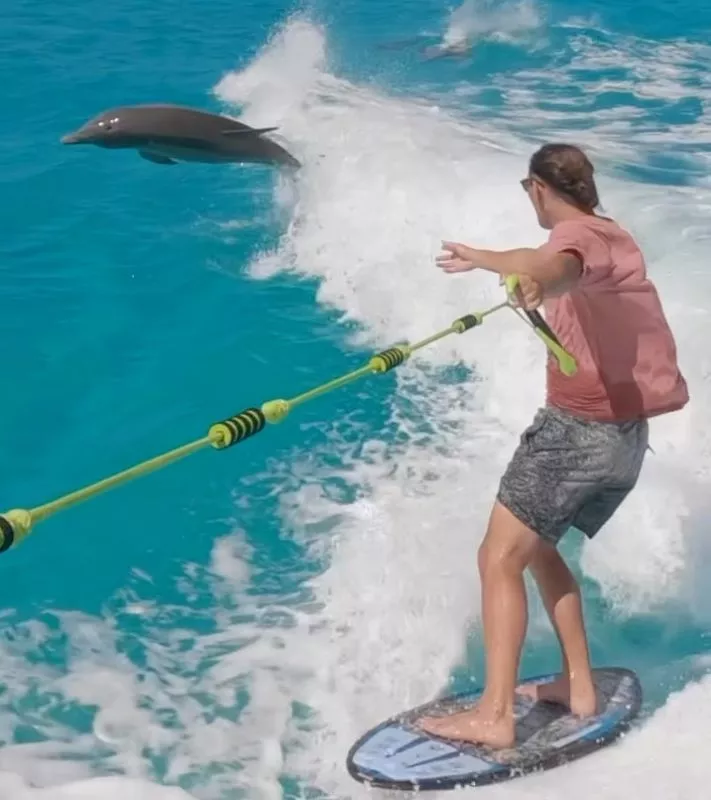
Getting Up Is Easier Than Most Beginners Think
One of the biggest hurdles for new wakesurfers is simply getting out of the water. The good news is that getting up is usually much easier than people think. The bad news is that most beginners make it much harder than it needs to be.
When riders struggle to get up, it's almost always because they're trying to muscle their way out of the water. They pull with their arms, fight the boat, and try to stand up before the board is even underneath them.
The reality is that the boat does most of the work. Your job is to get into the correct position and let the tension in the rope bring the board to your feet.
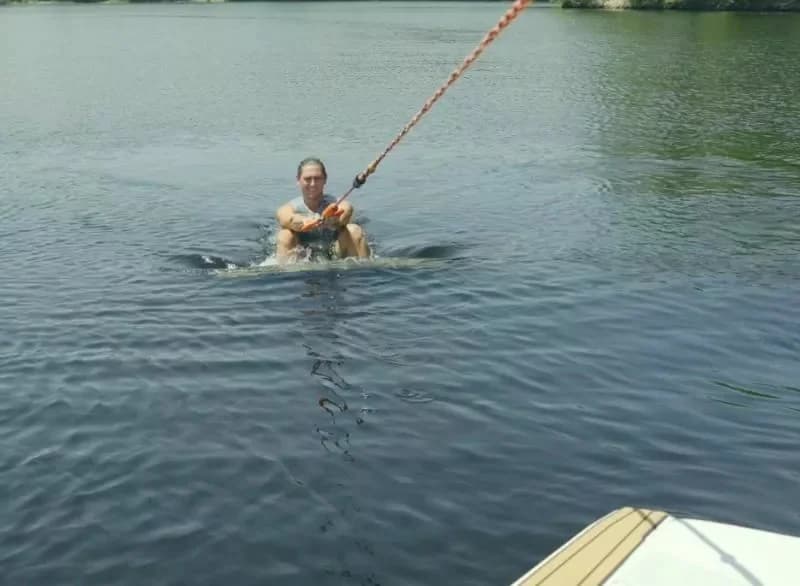
The 9-Step Method I Teach Beginners
Here's exactly how I teach riders to get up wakesurfing, the same progression I walk through in how I teach wakesurfing: my 5-step process.
Step 1: Relax in the Water
The first thing I tell every beginner is simple: relax. A lot of riders are nervous before they even start. Their arms are tight, their legs are kicking, and they're already fighting the water before the boat moves.
The more relaxed you can be, the easier the start becomes. Before the boat starts moving, take a breath and get comfortable floating in the water. The start should feel calm, not rushed.
Step 2: Put Your Heels on the Rail Closest to You
Once you're floating comfortably, grab your board and bring your heels onto the rail closest to your body. This is one of the most important parts of the entire process.
You want both heels resting on the edge of the board nearest you. A lot of beginners place their feet flat on the board right away, but that usually makes the start harder.
By placing your heels on the rail, you're setting yourself up for the board to naturally flip up to your feet once the rope gets tension.
Step 3: Bring Your Knees to Your Chest
Next, bring your knees up tight toward your chest. Think about making yourself compact. The tighter your knees are to your chest, the easier it becomes to control the board during the start.
One of the biggest mistakes beginners make is extending their legs too early. When that happens, the board gets pushed away from the body and the start becomes much harder.
Stay compact. Keep everything tight and controlled.
Step 4: Keep Your Arms Straight and Relaxed
Once your lower body is set, focus on your arms. Your arms should be straight and relaxed.
Don't pull. Don't bend your elbows. Don't try to row your way out of the water. Let your arms extend comfortably in front of you.
The rope is there to provide tension, not something you need to fight against.
When riders bend their arms and start pulling, they usually create more problems than they solve.
Step 5: Wait for the Rope to Tighten
Now comes the part most beginners rush. Once you're in position, let the driver know you're ready. As the boat begins to move, you will start feeling tension build in the rope.
Stay patient and let the rope do its job. You should feel the line gradually tighten as the boat starts pulling you forward.
Step 6: Apply Pressure Through Your Heels
As soon as you feel tension in the rope, start applying pressure through your heels. This is the key that makes everything work.
That heel pressure causes the board to flip up underneath your feet. The board is basically rotating into position. You don't need to force it, kick it, or stand up yet.
Just apply pressure through your heels and allow the board to come to you.
Most riders are surprised by how little effort this takes.
Step 7: Let the Board Come to Your Feet
This is one of the biggest concepts I teach: the board comes to your feet. You don't go to the board.
A lot of beginners try to stand up immediately. They see the board moving and instantly try to jump onto it. That's usually when things go wrong.
Instead, stay patient. Allow the board to flip into position naturally. The smoother this transition is, the easier the start becomes.
Step 8: Stand Up Like You're Getting Out of a Chair
Once the board is underneath your feet, it's time to stand. Don't jump. Don't lunge forward. Don't yank on the rope.
Stand up like you're getting out of a chair: smooth, controlled, and simple.
As soon as the board reaches your feet, stand up naturally. That's it.
Step 9: Move Out of the White Water
Once you're standing, your next goal is to move out of the turbulent white water. This is where a lot of beginners get bounced around. The white water is messy, unstable, and harder to control.
You want to move onto the clean face of the wave as quickly as possible. That's where wakesurfing becomes much easier, and where you start setting up for how to drop the rope in wakesurfing.
Once you're on the clean face, you will feel more comfortable and in control.
Why Beginners Struggle to Get Up Wakesurfing
Over the years, I have noticed the same mistakes over and over again. Pulling with their arms is probably the most common issue. Riders try to pull themselves out of the water, but the boat should be doing the work. Many of those habits also show up in the common mistakes new wakesurfers make guide.
Extending their legs too early is another big one. When riders straighten their legs before the board flips up, they lose control of the start. Standing too soon also causes problems. Let the board come to your feet first, then stand up.
And finally, a lot of beginners simply fight the water. The more relaxed you are, the easier everything becomes. Trust the process, trust the boat, and trust the board. If you are up but still feel stuck behind the boat, learning how to diagnose why a rider is struggling behind the boat is a good next step.
Three Things to Remember
If you only remember three things from this lesson, remember these.
- Don't pull yourself upKeep your arms straight and let the boat do the work.
- Keep your knees tight to your chestA compact position makes the start much easier and keeps the board from getting away from you.
- Use heel pressure when you feel tensionHeel pressure is what flips the board up underneath your feet. Everything starts there.
Final Thoughts
Getting up on a wakesurf board isn't about strength, it's about positioning. Relax in the water, put your heels on the rail closest to you, bring your knees to your chest, keep your arms straight, and wait for the rope to tighten. Once you feel tension, apply pressure through your heels, let the board come to your feet, and stand up like you're getting out of a chair.
Master those fundamentals and getting up starts to feel natural. Once you can get up consistently, move on to first things to practice after dropping the rope.